
A Sydney hospitality GM spends hours each day on data reconciliation instead of being on the floor or coaching staff. Matthew Cox, founder of TechEasy and a hospitality IT veteran, notes in a webinar hosted by Apicbase that AI rollouts usually fail not because of the technology, but because the foundational systems are weak. AI struggles when data is fragmented, there is no single source of truth, and systems are disconnected, which is exactly why AI in enterprise foodservice depends on a governed, connected data foundation.
These are the takeaways of Matthew Cox’s presentation
The foundation problem
Cox’s diagnosis: AI is only as good as the data underneath it.
“If anyone makes a mistake or enters incorrect information, that can skew all your data. If you have an agent over the top and you’re asking it questions, it’s going to give you false information because the data is not correct.”
Running a venue on month-old reports is like using last Tuesday’s cover count for today’s service. The numbers are real, but they are no longer useful.
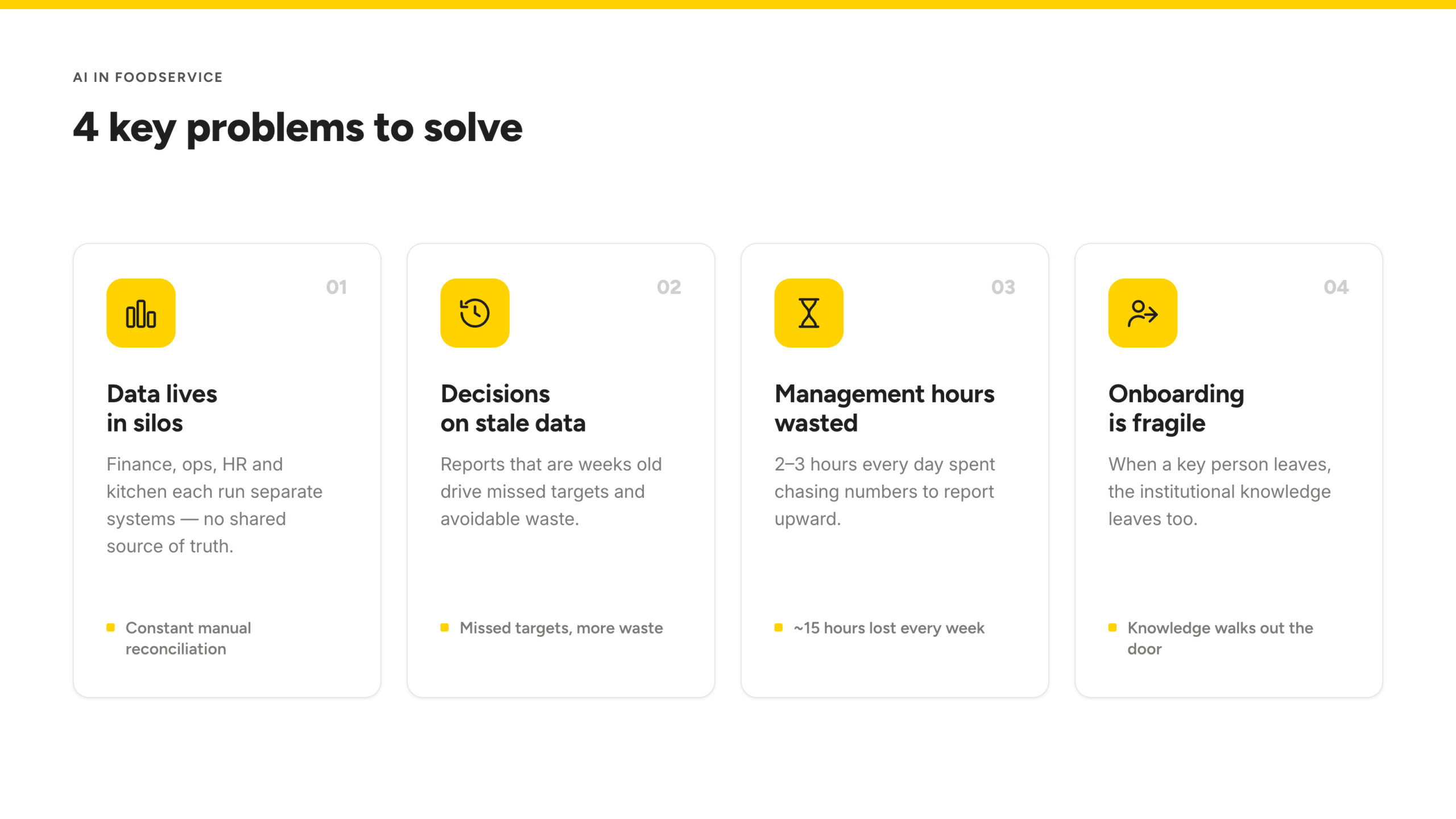
Before deploying any AI tool, you need to solve four key problems:
- Data is kept in silos. Finance, operations, HR, and kitchen teams all use separate systems without a shared source of truth.
- Decisions are based on outdated data. Snapshot reports that are weeks old can lead to missed targets and unnecessary waste.
- Management loses valuable time when GMs spend two to three hours each day just on upward reporting.
- Onboarding is fragile. When a key person leaves, their institutional knowledge leaves with them.
Governance is often skipped
Clean data is necessary, but it is not enough. Without governance, even accurate AI output becomes noise that no one uses.
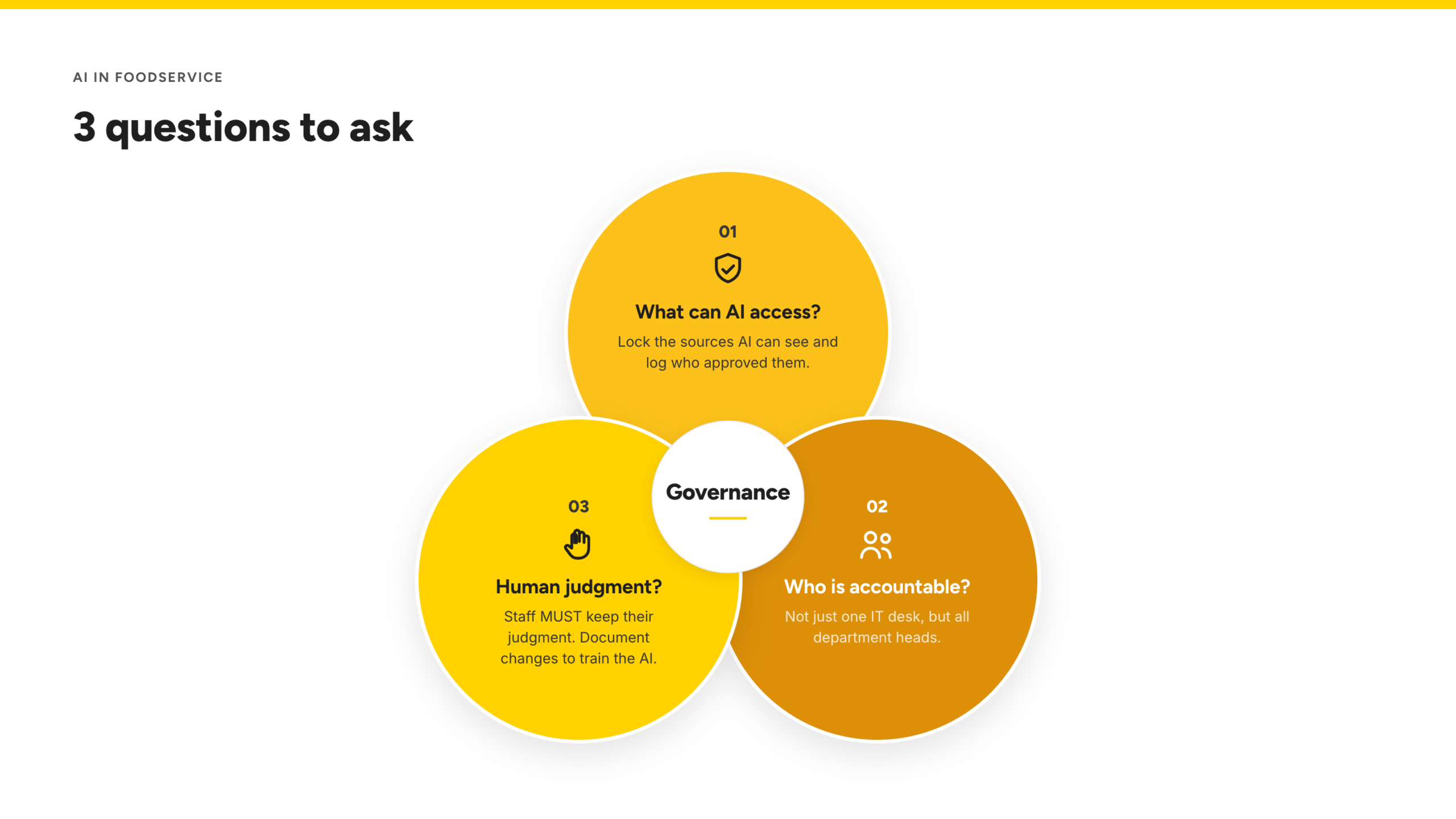
Cox highlights three questions every group should answer before going live:
- What data can AI access, and who has approved it? A quarterly review with your senior leadership team should be standard.
- Who is responsible when AI makes a mistake? Accountability should be shared among department heads, not placed on just one IT person.
- What is the process for overriding an AI decision? Staff should be able to use their own judgment without facing consequences.
“My AI might come back and say you need to reduce your labour tonight because the sales are down — but the human might know there’s a football game finishing at 10 o’clock. We haven’t plugged in information on events in the area and the weather. The staff are allowed to override.”
When staff override the AI, document it. This feedback helps the system improve. Each override provides free training data and signals to the AI specialist, including event calendars, weather, and booking pace.
AI is a tool for thought
The biggest misconception Cox hears, across Australia and the UK, is that AI is coming for headcount. His reframe:
“It changes what the role spends time on. It frees people up to feel valued, to feel like they’re making a real difference and to focus on the guest-facing side.”
Cox measures ROI by the quality of decisions on the floor and whether the guest experience improves, not headcount saved.
A general manager starts each morning with a ready brief that includes sales, labour, and ordering priorities from the night before, all without touching a spreadsheet. The data handled the overnight reconciliation, so the GM can get straight to the floor.
At 4pm on a slow Tuesday, a venue manager asks AI if the full casual roster is justified based on current bookings and recent similar Tuesdays. The system gives an opinion, and the manager decides in two minutes instead of twenty.
Three things to get right before you start
Cox has seen enough failed roll-outs to know where they break. The same three gaps show up every time.
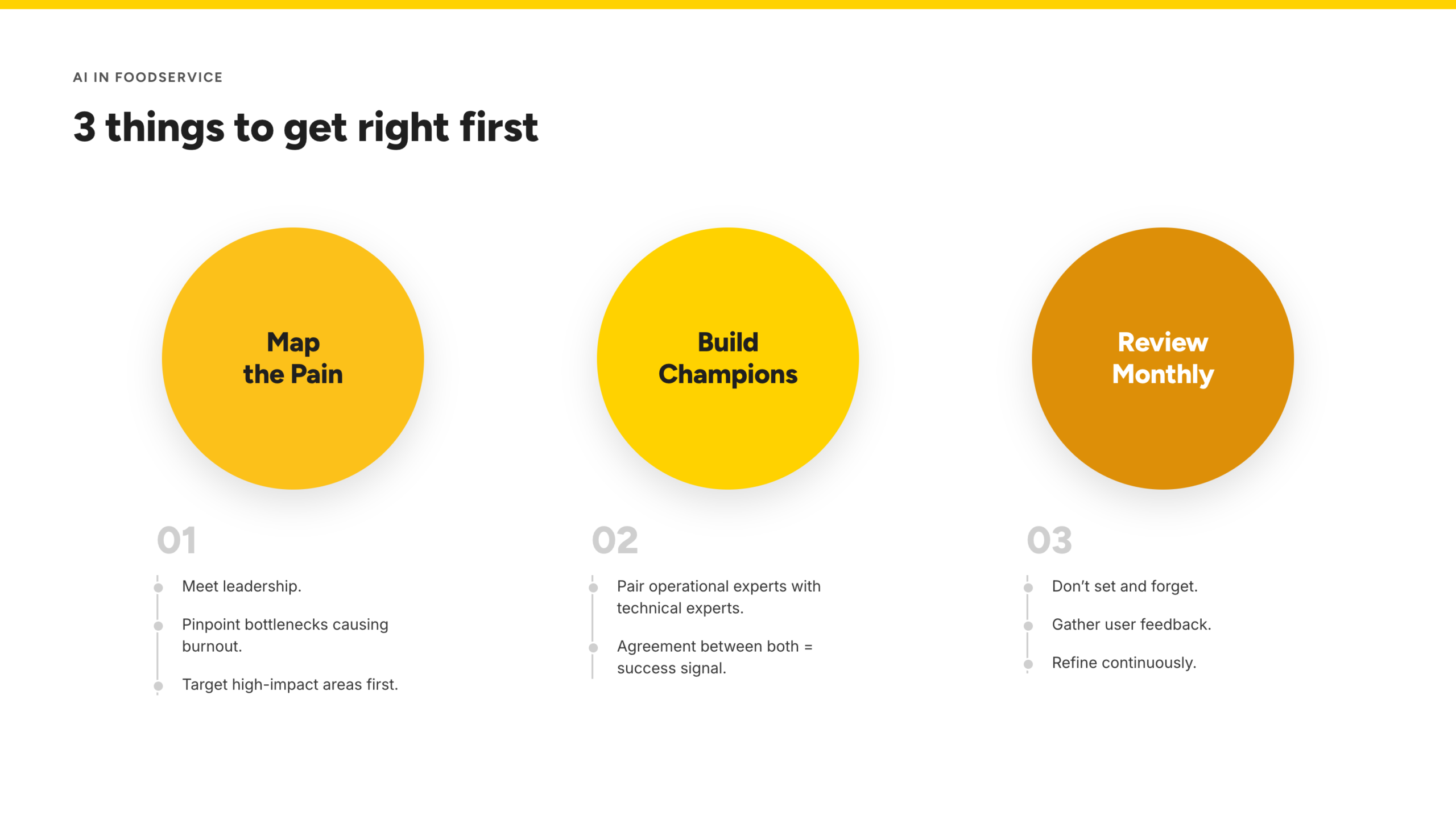
- First, map out pain points before considering an AI solution. Meet with senior leadership to pinpoint your biggest operational bottlenecks, especially those that lead to burnout. Focus on these high-impact areas for the clearest improvement and strongest case to leadership.
- Next, develop champions within your team, not just a system. Pair operational experts with technical experts. When both agree on a process, it is a strong sign of success.
- Finally, set up an ongoing evaluation. Do not just “set it and forget it.” Hold monthly reviews with system users, gather feedback, and make improvements. Continuous improvement is important because the first version will always need refinement, so regular oversight is needed for lasting results.
The bottom line
Without structural change, the GM will keep spending hours each day chasing data. AI delivers results only after foundational changes like clean data, governance, and team empowerment are in place. Then, the morning brief flows automatically, letting people focus on what matters. Technology makes this division clear.

Stay ahead of what’s changing in food service
Keep up with the operators and analysts shaping the industry. The Apicbase blog covers the trends, data, and strategic decisions that matter most to multi-site restaurant leaders.